Showing posts with label CEED 2018. Show all posts

22 September 2016

Weekly time table (strategy) for CEED preparation


Hello all

Please note that there is no universal strategy applicable for everyone. Strategy and preparation level varies from person to person based on their existing abilities (proficiency in a field), how much time to spend everyday, their status (completely dedicated or partially preparing and also aiming for other exams), their ease of understanding/grasping topics, their ability skills and so on. So, it all depends on personal capabilities, but this timetable will be helping those who need guidance or a systematic approach of preparation.

Having a reference time table might give you some idea of what topics to be studied, how much time to be spent for the topics, how length they are, your status/level for that topic and most importantly it will help as a check list to ensure that you don't miss any topic being unprepared. 

The first strategy/time-table is for those who are average or below average at sketching/ drawing etc

The second strategy is for those whom are above average or very good at sketching

Kind note:

  1. I've included numbered labels for the Design part of CEED (Part - B), so that I don't have to repeat them every time in the schedule. I've given two Strategies for relevant people related to Part B (design part), but GA time table will be common for both the strategies
  2. You might be the best judge to know your abilities, shortfalls and the need for topic improvements, so adjust the given time table accordingly and go on your phase, that best suits you. Below timetable might only act as a reference :)

The following topics and their respective Labeled numbers will be used in the schedule given below.

------------------------------------------------------------------------------------------------------------
(Label - Topic)

0 - product Design/Industrial Design
1 - Visual Communication, Poster, Logo
2 - Animation, Story board making, comic strips/frames
3 - Story writing, Story write-up given some characters, picture composition - story writing by looking at a scene/image
4 - Creative use of items - waste/reusable
5 - Problem identification given a scenario, finding Factors, design idea proposal for the prob.
6 -  Sketching, Line drawing, Exploded view/shape, composition, part view
7 - Shading/rendering
8 - Human/animal sketching line/object sketching
9 -  Ideas of using products and applications (like use of invisible fluids etc)
10 - Fault finding in existing products/designs/sketches
11 - Visualization and Imagination ques.
12 - Draw things/products/designs/human/animal from imagination
13 - Draw by copying/ replicating/ seeing existing images/ products/ scenarios/ scenes/ designs etc
14 - Study on latest technology, products, design ideas etc
15 - Ideas from others in social/print media say in blogs, FB, Pinterest, behance etc
16 - Sketch practice
17 - Previous years part B practice; going through questions to understand the nature
18 - Geometric/solid manipulations, transformations, views
19 - Perspective/Vanishing point drawings/study

------------------------------------------------------------------------------------------------------------

Important Note (for CEED Design; Part-B):

  1. Going through existing products/design/frame/others ideas is very important, likewise finding faults and coming up with your solutions is always a good designer practice (at least in my view)
  2. Carefully understand the requirement of the design questions - What they asked or looking for
  3. Mind the evaluation criteria before attempting/solving any design question
  4. You need to have a fair idea on existing products and their technology. So, I've included a topic/section with this heading in the timetable
  5. Sketching is imp. but design idea is the first important criteria to be considered, that's why I've given greater emphasis on how you can culminate the process of idea generation by way of various practices listed in the Labels/topics 

------------------------------------------------------------------------------------------------------------

STRATEGY - 1 (Only Design Part)

Level : Below average in Sketching

-------------------------------------------------------------------------------------------------------------

Month : September
  • 3rd week - 6 (line drawing), 13, 5, 19 (line drawing)   
  • 4th week - 4 ,8 , 10, 15, 13, 17, 6, 11 (Line drawing), 14, 18

Month : October
  • 1st week - 3, 12, 17, 8, 10, 6 (sketch/Line-drawing), 0, (1 or 2 or both), 18, 19 
  • 2nd week - 10, 16, 15, 9, 6 (sketch, exploded view), 5, 0, 11, 12, 19
  • 3rd week - 3, 10, 9, 5, 0,  (1 or 2 or both), 4, 15, 18
  • 4th week - 17, 8 (little), 6 (sketch/exploded view), 0, (1 or 2 or both), 4, 10, 12, 14, 15

Month : November
  • 1st week - 17, 16, 8, 9, 7, 5, 11, 12 (little), 14, 19
  • 2nd week - 10, 16, 7, 0, (1 or 2 or both), 14, 15
  • 3rd week - 3, 10, 9, 7, 11, 12, 5, 15, 18
  • 4th week - 16, 12, 18, 19

Month : December
  • 1st week - 16, 12, 17 (just overview, mild practice)

------------------------------------------------------------------------------------------------------------

STRATEGY - 2 (Only Design Part)

Level : Above average (good) at Sketching

-------------------------------------------------------------------------------------------------------------

Month : September
  • 3rd week - 5, 10, 11,, 14, 15, 18
  • 4th week - 0,  (1 or 2 or both), 4 , 5, 17, 18, 19

Month : October
  • 1st week - 0,  (1 or 2 or both), 3, 4, 5, 9, 18, 19
  • 2nd week - 4, 9, 10, 11, 12, 14, 15, 18
  • 3rd week -  0,  (1 or 2 or both), 5, 6, 11, 19
  • 4th week - 0,  (1 or 2 or both), 3, 8, 9, 10, 12, 15, 18

Month : November
  • 1st week - 3, 4, 5, 6, 10, 14, 15, 19
  • 2nd week - 0, (1 or 2 or both), 6, 7, 11, 10, 15, 17, 18
  • 3rd week 0, (1 or 2 or both),, 3, 4, 12, 17
  • 4th week - 18, 12, 10, 15, 4

Month : December
  • 1st week - NIL

-------------------------------------------------------------------------------------------------------------

GA Study Strategy (applicable for all)


GA study includes verbal and verbal topics. 
Since most of you can have access to aptitude and reasoning books, cost of which is comparatively less than any NID/UCEED/CEED books, I, therefore, list out the topics from those books.  I will list out the topics with their ranking in brackets. A very high rank (high being 5) means you are advised to prepare to the full for that topics, and a very low rating (low being 1), means you are advised not to spend much time on that and any rating in between means you are advised to give importance accordingly (time).

Verbal Reasoning
  • Syllogism (2)
  • Logical Sequence of Words (2)
  • Blood Relation Test (1)
  • Series Completion (2)
  • Cause and Effect (2)
  • Dice, Venn Diagrams (3)
  • Cube and Cuboid (2)
  • Analogy (2)
  • Seating Arrangement (3)
  • Character Puzzles (4)
  • Direction Sense Test (5) 
  • Arithmetic Reasoning (3)
  • calendar (1)

Non Verbal Reasoning
  • Series (4)
  • Analogy (4)
  • Classification (4)
  • Analytical Reasoning (5)
  • Mirror Images & Water Images (2)
  • Embedded Images (2)
  • Pattern Completion  (5)
  • Figure Matrix (3)
  • Paper Folding (5)
  • Paper Cutting (5)
  • Rule Detection (5)
  • Grouping of Images (3)
  • Shape Construction (2)
  • Image Analysis (5)
  • Cubes and Dice (5)

-------------------------------------------------------------------------------------------------------------

Month : September
  • 3rd week - CEED/UCEED Mock-test/previous paper test (to get hold of pattern)
  • 4th week - GK on  art history, renaissance, designers, famous paintings/works, aptitude on images/math, mensuration, non-verbal reasoning 

Month : October
  • 1st week - Perspective study, vanishing point concepts, practice/test on ability tests, IQ ques, reading and paragraph comprehension, GA on authors, art history, renaissance, mechanism and everyday usage things working, basic concept behind that, CEED/UCEED Mock-test/previous paper test, non-verbal reasoning
  • 2nd week - print/color media study, India culture, animation study, logical arrangement of words, illusions, pattern analysis, pictograph puzzles, aptitude on images/math, mensuration, odd-man-out type ques, verbal reasoning  
  • 3rd week - paragraph comprehension, Architectural concepts, mechanism and everyday usage things working, basic concept behind that, pattern analysis, aptitude on images/math, CEED/UCEED Mock-test/previous paper test, verbal and non verbal reasoning
  • 4th week - GK on painters/paintings, designers, famous persons, facial expressions, Mathematical aptitude, image based aptitude ques that improve observation/visualization and imagination skills, pictograph puzzles, mensuration/math aptitude, CEED/UCEED Mock-test/previous paper test

Month : November
  • 1st week - ability tests (identifying pattern in a given set), verbal reasoning, math aptitude, solid geometry/projections, CEED/UCEED Mock-test/previous paper test, GK on India culture, 
  • 2nd week - Solid/image manipulation, geometry etc, GK on materials, typography, font, Architecture, mensuration, odd-man-out type ques,  non verbal reasoning revision
  • 3rd week - latest products, authors, architecture, video/media, animation,  math and image aptitude revision and practice, ability practice, pictogram puzzles, color schemes practice, CEED/UCEED Mock-test/previous paper test,  environmental awareness, Paragraph comprehension revision
  • 4th week - English verbals, meanings, synonyms and antonyms,, revision on painters/paintings, designers, famous persons, India culture, art history,   animation terms, Mock tests or previous year papers (as many as possible), CEED/UCEED Mock-test/previous paper test

Month : December
  • 1st week - revision on GK: art media, colors, designers, font, typography, photography, logos, authors, architecture, video,  renaissance,  CEED/ UCEED Mock-test/ previous paper test

-------------------------------------------------------------------------------------------------------------
Hope this comprehensive time-table helps you prepare well!

If you feel like some topics are uncovered in the above weekly plan, please do comment here so that others would also know. 

All the best for your start :)


2 November 2014

Everyday Design ideas for CEED practice

you are here ........ Practice >> Design exercises


Welcome back friends, like I mentioned (numerous times) in my earlier blog posts, much of the concern has to be given to design ideas as they are more important and are prioritized even than sketching part of CEED exam. It calls your creativity/capability to solve such questions. I feel honoured; for one of my last year's design practice question (design of public dust bins) that I dealt in this blog appeared in CEED 2014 for 50 marks ! That's why just like I did last year, I will be updating some design challenges ever-day to let you practice at your own pace.

This year, I will focus on posting questions that might probably relate to self/community development, in other words it awakens your social responsibility as a citizen; and simultaneously let you prepare for CEED. I would be introducing you to some new trends and dimensions in design, in other words practical design approaches. Please understand the essence of the question before attempting. I hope you enjoy practising these questions.

Some quick note on good practices :

  1. Read the question twice or more times until you understand it completely
  2. Don't attempt before it's understood, at times you will find wasting time doing questions in WRONG manner 
  3. Focus on meeting the requirements of the design/question and then do attempt accordingly
  4. Set a time limit to your attempts, just to make it a habit. But you may take more time as this is just practice section. Remember framing ideas and delivering that roughly/simply within the time are most important
  5. Don't include unnecessary additional's to your design except what required, if you are running out of time in attempting the question 
You may get more useful design related tips in this design example - Walking stick design analysis with some RULES 


Warm-up exercise 

The Indian Government, under the administrative rule of our present PM Narendra Modi, took initiative and developed an online portal for the common people (citizens) to raise their voice as well as suggest ideas to the different sectors of India - all related to policy making, public developments, innovations through effective participation of citizens and through other awareness programs. In this context, they started implementing some online contests for participants to design logo's, themes and many other things. 

As a warm up exercise and to let you participate in the ongoing contest, I would like you to complete the design and submit to the portal (as per your wish). You task is to 

"Suggest theme elements, tagline and logo for India's participation at hannover Messe 2015" 

Here is the Indian Government portal  where you would find the contest - Gov India online portal
For you reference, here is - Details and website of hannover Messe 2015

I also recommend you to go through the Gov. website for more similar contest for your leisure practice
  1. Swachh bharat abhiyan logo design
  2. Digital India mission
  3. Financial Inclusion Logog contest
Hope, the above warm up exercise would introduce you to some new platforms as well as inspires you to participate for public welfare !


03.11.2014


Hope you enjoyed doing yesterday's warm up exercise. I would like to see your logo being selected for that contest by Indian Government ! Well, let me start the first exercise as part of your design practice.

Imagine you are a super hero with gifted supernatural powers, and you are just like other marvel comic hero's - helping people around whenever some incident happens. Once you are just passing by, but suddenly you found a boy in danger (any kind of danger). Immediately you jump in to the situation (as a super hero) to save the boy out of the danger. Fortunately you saved the child just in time and received appreciation from the surrounding public.

Now your task is to make set of comic strips (not less than 3 frames) illustrating the above story/situation. I recommend you to frame the characters in an interesting way,  You may select any of the following tips for situation or character selection. Else frame your own situation.

Tips for situation selection
  • Boy being robed
  • Boy was about to get hit by a vehicle (truck or bus)
  • Boy was about to fall from a building accidentally 
  • Boy was caught in a home that was in fire
  • Or any of your own

Tips for hero selection
  • Your hero might be either men/women
  • Your hero can either fly, have tremendous strength or even can do other wonders
Enjoy doing this fun exercise by learning how to do comic strips. For getting deeper insight on  story board framing, you may refer to this - Story board and poster making guiding website links


04.11.2014


Exercise -1

Today's exercise would help you with 'Writing skills'. Last year CEED exam included this kind of question; probably to test candidates story framing and writing ability. This exercise has been designed so that would cultivate the habit of creative thinking and creative writing.

Carefully observe the below scenario (picture) and frame a story that would fit to the given situation. Write your story in not less than 250 words.


Image attributes : dennyhellman blog


Hints and tips for attempting similar questions :

  • Spend time observing the given situation/sketch without jumping straight to write the story - Have a clear vision of what has to be written by framing the story
  • Take time !
  • Observe every individual/character of the situation 
  • Observe their activities - what they are doing
  • Most importantly note/mind the "mood" of the character - it's very important in story framing ! 
  • Mind the age and gender of the characters !
  • Look for surrounding things - like TV, books etc

The above tips would give you some clues on how to frame a story from a given situation with much ease.

Exercise - 2

I would recommend you to practice one more writing exercise - although this type of question may not appear in CEED exam, but this would help you with writing comprehension or essay's.

Being a citizen of the nation, you got motivated with other's social activities by going through this motivational website - The Better India and so decided to write an letter/essay about your views/suggestions  on any one or all of the following issues
How to change Indian Economy ?
What ways to reduce poverty in India ?
What are some suggested steps to reduce cost of commodities ?
Or any of your own social concern

You are required to write the letter/essay in not less than 250 words. Hope you will enjoy "the power of writing !"


05.11.2014

All right, hope you enjoyed doing yesterdays writing exercises. Well, last year CEED paper surprised me by introducing new type of design question - GUI - Graphical User Interface. UI/UX designs are emerging as an fastest growing design field in the current digital/mobile world. So, today let's practice a UI question. You may get a complete information on GUI along with some good tips to attempt GUI questions here - User Interface Design principles and rules

Design a Graphical User Interface for a a smartphone (mobile phone) of a online shopping company for selecting a mobile device as well as allow for purchasing the same with all the payment process included.

Present your UI designs in the form of screen shots. Draw minimum of ten screen shots that depicts all the process - from home page, phone selection to final purchase confirmation.

As said above, you may check the above link for tips and tricks to handle such design problems.


06.11.2014


Today, we will do some exercise on sketching. Although, having design ideas is the first most concern for any designer, sketching stands second and hence play a crucial role in any design process. Sketching is the mode of conveying your ideas. So, you are expected to have at least 'Average sketching' skill as a beginner. Here is a jackpot to you !

I have also included some online ongoing design-contest today for your benefit.

Sketching exercise

You've given freedom at your school (or office) to enjoy comfort conditions/environment by taking your own requirements and fulfilling that. In this regard, the administration has asked you to give your necessities (with design demonstration) especially in regard to your work/study place.  Design your own class-room/office desk (sitting and working table) that meets your own necessities and requirements as per your convenience, showing all the accessories and inclusions that you wish wish would help you, compared to the present table design.You may choose any shape, include any attachment and so on.

Hints -
  • How about a semi-circular shaped desk for easy access ?
  • You may show charging facilities for your laptops/tablets as well as other power devices
  • Place for water and other food related things
  • Place/sections for files/papers/bags with suitable compartments
  • Fanning arrangements etc

External contest !

Hope you have participated actively in the first day contest, now here goes some additional contests :

Typography design contest on hiiiband blog -

Photography design contest on hipa blog -

Poster design contest on 'home-design' website - (Just for practice purpose, be cartful it's paid in $50 !)

Okay, finally; since you are practising sketching work, let me include the below video as a reference for making you aware of some of the common mistakes that last year students did while they practised - Please understand the common mistakes to avoid, and also learn how to be productive while sketching by going through this video.


07.11.2014


Well, today we shall practice making of posters.

India is one of the fastest developing country, next only to China (in economy). There's tremendous improvement in almost all sectors of operations, but still poverty prevails ! reason why ?

Like the country is growing fastly, it's population is also increasing massively, I can say double than that of the other growths ! currently it's near 1.2 billions out of 7.2 billions of the world ! (nearly 17% in a single country ?)

 The big difference between China and India is, Chinese citizens took great steps in reducing their population growth, may be people realized or may be their government took measures with awareness campaigns or so. That didn't happened earlier in India. Citizens are yet to get aware of the outcomes of the  rapid population growth. Say when a family has 3 to 4 children without having a family plan of 1-2 children, then that family suffers in all ways. The family leader feels difficulty in feeding all those children, can't provide education to many, can't look for their nutrition provision and so on. The final result - that family ends in poverty !


source : aljazeera blog

If the same family took steps and ended up with 1-2 children, then all the expenses are reduced - costs, educations, food, etc, So ultimately that deters their poverty level. If the same thing happens in every family, then .......... holla............ poverty gone in India with better economy and prosperity.

Okay, here is the deal, you are an official government representative and was asked to make an eye catching poster that would bring an awareness of population growth to citizens (especially for rural and urban slum residents); you may cover opt to cover any or all of the above ideas. Hope this interest you !

08.11.2014


Today, we will practice on Product Design question.

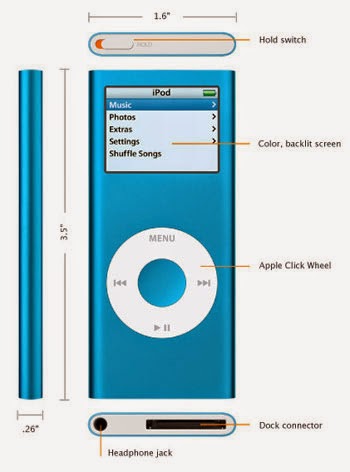
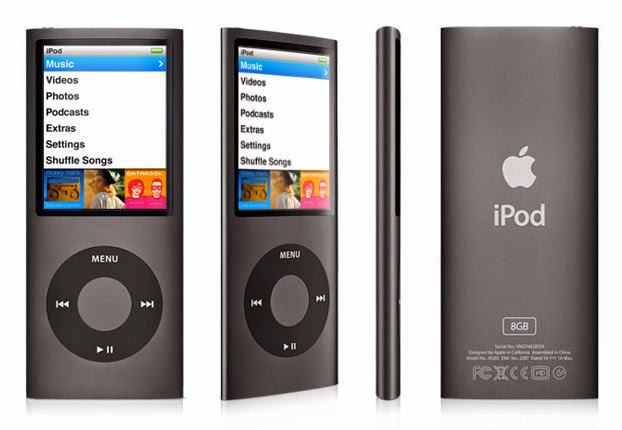
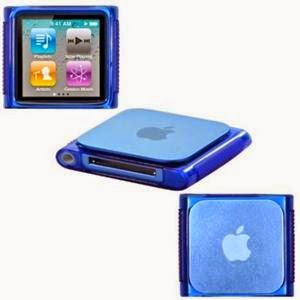
You are working in a company delivery products specifically related to electronics or gadgets. Your company wants to design and release a mp3 music player with display included for volume controls, track/genre selections and other operation as a competition for the Apple's famous iPod Nano. You are a part of the design team and your team leader asked each one of you to come up with separate designs to select the best out of many or to mix different ideas in a single product.

Now, design your own mp3 model that is
  • Slim
  • Unique in terms of design looks, feel, operation - menu's, buttons etc
  • Select proper material that is - light weight, durable, aesthetic feeling and low cost (plastic is banned in your company)
  • Comfort and simple for carrying

The below pictures are included for your reference or idea, covering all the generations of iPod.


09.11.2014

Today, instead of dealing with design practice exercise, I have covered this weeks Part-A practice questions set for your benefit here -

CEED 2014 Part-A Practice exercise, week - 1

10.11.2014

Today, I have reviewed yesterday's Part - A mock test questions has. I updated all the answers with explanations (wherever required). Find the answers here

Answer key for CEED 2014 Part-A mock test - 1

11.11.2014

Okay, we will start again our daily design exercises as usual ! Here's two exercise's for today

Design Exercise 

You probably might have come across 'Electric bicycles' that is famous in developing countries like China. Indian Government decided to launch public owned bicycles that would run manually as well as on electricity (whenever required - but not always !). You are assigned the job of designing the bike, such that the bike is

  • User friendly
  • easy to handle with less arrangements
  • Less energy usage (renewable type)
  • Cost effective etc
You are required to identify 6 (six) distinct factors in designing the bicycle, identify the need for such bicycles in cities (explain that in written) and also come up with not less than three distinct design ideas. You should present your final design with necessary rough sketches.

Evaluation criteria
  • Practicalness - reality in design
  • Application oriented design
  • Rough sketches and construction
  • Identifying the factors and need

Exercise - 2

Check the below messy picture and write a story related to the situation depicted in not less than 200 words.


Image courtesy - kidacne.com

12.11.2014

Once a wild dog happened to meet a pet dog. Both were having conversation about their life. The wild dog wept out and told the pet dog - how forests are being encroached because of human interventions, and what lead the forest wild animals to migrate to cities and near by villages, ultimately making them fell into human traps. It told the pet dog, that pet dog's life is appreciable as they don't have any issues with humans. Now, hearing this, the pet dog started laughing at her and told how even the pet dogs are getting troubles from humans. It said that life in cities (and especially in connection with human) is miserable and it's turning out worse day by day.

Now, your task is to frame the above story and depict the same in the form of comic strip, in not less than three frames.

13.11.2014

We have covered almost all parts of CEED design questions, but just remember guys, sketching has to be practised simultaneously. It's equally important in exams. So, today I will include an exercise on sketching through imagination. I'm also including links for some of the sketch practice sections that I hid from this blog long back. If you are interested in practising by copying those questions, I recommend you to save those pictures to your system, because I will hide these links again by this weekend.

Sketch the view of a person sitting in a sofa in a room (home) and watching a TV.

Sketch examples


Those who want to practice sketching are advised to save these pictures, because I will hide these links again by this week end.

Hope that helps.

14.11.2014


Creativity Exercise

Ice Cream packages comes in different sizes - ranging from candy to family packs. Family pack ice creams are usually packed in a large bowl like boxes as shown below.


Source prepac

Materials used for packaging range from paper or disposable card rolls to plastic. Now your job is make creative uses of these boxes - to identify alternative uses of used ice cream boxes (of any shape or size) for day to day or regular use.

UI Design Exercise - 1

Current mobile devices runs mostly on any one of the platforms : iOS, Android, Windows, Firefox and some other minor operating systems (OS). You are working in a company developing a new mobile OS software.

Design a User Interface system, that is different from the current top OS. Show the screen shots of top 10 functionalities like start screen, menu, notification bar, widgets design and placing, settings, picture gallery or any other function. Also choose an app to display in your UI system.

15.11.2014


Modern Indian toilets trend has been shifting from traditional pour flush type to cistern flush type (western toilets) as shown in the below picture; owing to rapid urbanization. In all those types of western toilets, flush buttons were attached to the water holder (as shown in the picture) behind the sitting posture. So whenever the user thinks of flushing while at use, he need to turn back and press the button (hands get twisted), and it's really painful with hands folded as if doing yoga. This might be not a problem for everyone, but for elder people, they feel bit inconvenient. Your job is to

  • State the problems with the current cistern flush design, 
  • State the necessity for new design
  • Identify a minimum of five factors to be considered while designing a new system
  • Make three distinct concepts and show them in rough sketches.
  • Show your final concept with all the details in proper views through clear sketches.


16.11.2014

Today, instead of dealing with design practice exercise, I have covered this weeks Part-A practice questions set for your benefit here -

Part-A mock test - 2 practice exercises


17.11.2014

Please take time to complete a 2 min survey by filling the below form to help me better understand your needs. This survey would definitely help you ! 

CEED and NID Survey form - 1

By the way, Today I have released answer key for yesterday's Part - A mock test. Do check the explanations and answers here

Answer key to Part - A mock test - 2


18.11.2014

Exercise - 1

Bulbs have usually less life and after they get exhausted, they are helplessly thrown. Now find five creative uses of bulb (as shown in the below picture) and show the ideas with appropriate sketches.


Exercise - 2

Design a multi purpose brief case that is probably meant to carry important documents and of course cash and cheques. The briefcase should be designed to let the owner use it with full security and with additional things. Something like theft and missing intimation through electronic way (may be by app inclusion in mobiles) and any other features. Show the rough sketches of different concepts and finally come up with a design with neat sketches.

19.11.2014

Exercise - 1

The below picture shows a typical Indian small-scale tea shop in rural villages. The owner of that shop decided to spend and re-construct his small tea shop to make it a hotel with all food provision. Now, that entrepreneur approached you to suggest him with the changes to be made, and what are the facilities to be added to make his customers loyal and regular.


Source - Kafila blog

Your job is to identify the customers (village residents) behaviour and design a new hotel for that location.

  1. Identify the problems with the present situation
  2. State the factors or inclusions that has to be made to change that situation
  3. State the facilities to be provided for the concerned population
  4. Show the owner your plans with sketches and explanations
Remember that the shop is to be opened in the same area (rural area) and so plan accordingly, although the owner is willing to expand his business, but he cannot afford for something like high-cost furnitures, aesthetically pleasing interiors and ore. That has nothing to do in such areas, right ? Remember both the user's preferences and location cum situation are very important while designing. So, do come up with this idea and make your sketches.


Exercise - 2

Now, consider the case where the above same village is now famous for international tourist and there's a huge population of travellers from around the world visiting that village. Now, imagine the same owner willing to develop a hotel, this time to the outers and he is ready to invest much greater than the earlier case. For this case, do the above all factors and analysis and come up with sketches for the proposed design.

20.11.2014

Design a poster for an awareness campaign to educate citizens of India, about the importance of saving electricity/power. The poster should also depict various methods or recommendations to reduce power wastage as well as effectively utilize them for sustainable future. If possible make separate posters for rural people, urban people and for school children's.

Picture Composition and design guide

Some of our friends came forward to help you with picture composition (framing story) and other design solutions I received their works and I'm now sharing with you. Please go through the below links and get some ideas.

Example of framing a story (Picture composition)

Solutions for Everyday Design works from Sameer Sapre


21.11.2014

Exercise 1 :

Make different designs of electric bulb (CFL, or any other bulbs). Designs that cover past, present and future. Go for different design shapes and creative your own design of a unique bulb design.

Exercise 2 :

Design a carrier/lunch box for kids that would also allow to carry liquid energy drinks like juice, milk etc. preferably in a glass or narrow jar type. There should be a minimum of two layers of boxes and the design should be unique and should also accommodate rest of the lunch box.

NOTE : I have included some more design exercises for the coming days in advance.


22.11.2014

This question is a bit time consuming but worth trying as this kind of design questions helps you with portfolio. Government of India decided to offer some battery-powered electric tricycles to the owners of the current human powered rickshaws, in order to support their economic growth with reduced prices and loan basis.

You are required to submit a design that seems efficient, easy-use, cost-effective, comfort-travel conditions and more. The rickshaws are meant to operate in different Indian terrains (road conditions). Below shows an example for your reference.


Image courtesy : modularmachines blog

23.11.2014

In the usual tricycle auto rickshaw design, designers considered placing of single wheel in the front, and two wheels in the back/rear.  Why not reverse ? I mean two wheels in the front and one wheel in the rear ?

State your design views, also compare both designs by bringing advantages and disadvantages with your final selection/choice.

Tips : Consider some vehicle stability design requirements like steering control, traction, front face area for wind, load and other stability factors.


Essence of Designing - 1


When you are designing any thing -

  1. What factors do you consider in  mind, state the factors ?
  2. What are the essential and optional factors in any design ?
  3. What is the requirement for any design in real life ?
  4. Why multiple choices/designs are required ? In other words, why designs usually gets upgraded ?
  5. What are the deciding factors to justify that your designed product/service is better than the previous similar design ? 
  6. What are some common tools for getting design ideas ? 
  7. What tools we usually use to communicate our designs ? 
  8. Are designs required in all fields/sectors ? When designs are required ?  


Essence of Designing - 2


Any new design should probably be for meeting any faults in the previous work. The new design should be simple and easy to use, understand, cost effective/economical, special future's, either multi purpose or single use. Also the current climatic situations demands the designs to be sustainable - environmental friendly materials, long life, efficient functionality and so on.

Design is not always required in every field. The reason or necessity or requirements are the main driving forces to look for new designs. Now a days customer complaints plays a crucial role in looking for better designs, so understand the needs and/or requirements in any design, be it is for CEED exam or for real life designs. How better your design performs depends on what advantages your design offers compared to others, or if starting from scratch, then whether that idea is feasible or practical. Designing without a reason is just considered as hobby or passion, and if that is practical and useful to at least one user, then it's useful, else it would just remain as a passionate idea !

Design ideas comes when you feel the need, when somebody suggests you, when you go through some other ideas.


--------------------------------------------------------------------------------------------------------

Thus ....... I end this years everyday design practice !

If you are further interested in practising exercises, then do check the previous years everyday design question and practice them. There's some good number of practical questions, check the below link

Everyday Design practice questions with some solutions


Hope you enjoyed practicing questions. 

All the best !

Important note :

You may avoid some common design mistakes by learning here - mistakes in design sketch works

--------------------------------------------------------------------------------------------------------